Showing posts with label Gospel. Show all posts

Wednesday, July 24, 2013

Escape or Endure?

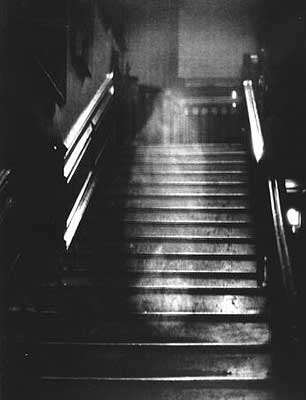
Rarely has so true a Scripture been depicted so falsely


The question before every human being on the face of the planet, to which God has already given answer, is this: Escape or Endure?


No trial has overtaken you that is not distinctively human; and God is faithful; he will not let you be tested beyond what you can bear, but with the trial will also provide the way through, so that you will be able to endure it. ~1 Corinthians 10:13

This is from the Mounce Reverse-Interlinear New Testament. I love the way it phrases this, because this is one situation where many English translations fail miserably. Let me give you an example or two of this:

No temptation has overtaken you except such as is common to man; but God is faithful, who will not allow you to be tempted beyond what you are able, but with the temptation will also make the way of escape, that you may be able to bear it. ~NKJV
The only temptation that has come to you is that which everyone has. But you can trust God, who will not permit you to be tempted more than you can stand. But when you are tempted, he will also give you a way to escape so that you will be able to stand it. ~NCV

The original text actually says that God will provide "ekbasis," or a route out. This Greek word is a combination of "ek" or "ex" meaning "point of origin; where action begins" and "basis" meaning "to walk; foot pace." Literally, it is stating that God will provide a route through the hardship. Not an escape, as if God was going to snap His fingers and remove you from the situation you're dealing with; rather, an escape route- A path to follow by which to exit hardship.

Readers confuse themselves on whether to escape or endure


The second point of issue with English translations, to a minor degree, and much more with the very READERS themselves, is the less than regular emphasis on the latter portion of this Scripture. Everyone loves the idea that God doesn't give us more than we can handle; still more people are very happy with the fact that God will just speak and *boom* - Our trials are over. The problem is that one section at the end which reads "so that you will be able to endure it."

Oops. If that remains there, then the verse as a whole can't mean that God's going to magically remove us from our individual struggles. So as a result, very few actually pay attention to that section... And as a result of that, we have some translations pandering to the itching ears. For instance:

There hath none other temptation taken you, but such as followeth the nature of man. God is faithful, which shall not suffer you to be tempted above your strength: but shall in the midst of the temptation make a way to escape out. ~2004 edition of the William Tyndale New Testament

You are tempted in the same way that everyone else is tempted. But God can be trusted not to let you be tempted too much, and he will show you how to escape from your temptations. ~Contemporary English Version

We’re all tempted to do so, but God is more than willing to help us follow God’s advice. ~Better Life Bible

A lot of you have heard me rail against the BLB, saying it should not even be considered a Bible, and this last quote is offered as further evidence of this.  However, even it is closer in truth at the last than the previous two.  You see, God is willing to help us follow His law (not advice) and His ways.  He is rarely willing to remove us from those situations wherein we are required to choose whether to follow Him or succumb to the world.

This is why the Mounce is so excellent in this regard- Not only did it handle the issue of the way through the temptation correctly, but it also makes certain to emphasize the fact that the answer to the escape or endure question is the endurance of the trial.  Ironically, for all the hard words and accusations that our modern translations get, one of the most maligned got it dead on accurate.

There isn’t any temptation that you have experienced which is unusual for humans. God, who faithfully keeps his promises, will not allow you to be tempted beyond your power to resist. But when you are tempted, he will also give you the ability to endure the temptation as your way of escape.        ~God's Word Version

Final thoughts on whether to escape or endure


Oftentimes, we as humans are so caught up in our daily lives that we read our Bibles when we should be
soaking in them. We simply give our Scripture of the day a quick read, and do not take the time necessary to pray and meditate on what it means.  If we took the time necessary, it would be obvious to most what this Scripture is saying right from the start.

In closing, let me reiterate this simply:

God tests us. He will not allow us to be so assaulted that we cannot stand our ground.  In every test, no matter how hard it gets, we can rest assured that He's already prepared our exit, and the path to get there.  He will rarely pluck us out of the hard times; but He will strengthen and encourage us so that we are able stand firm as long as we trust in Him- And THAT is our way out... Endurance.


Grace and peace be with you as you endure!

Monday, August 13, 2012

Jihad Within


I find that one can read to the heart's content on subjects such as investigation, politics, law, medicine, and so on, but it is never anywhere near as fulfilling as speaking with an experienced person within that particular field.  Likewise, one can read all there is to know about Mormonism, Witchcraft, Atheism and Islam- But it does not beat the understanding one can develop after speaking about it with someone who actually practices.  It is, of course, vital to remain distanced to some degree, as well as to be well versed in one's own faith and prayed up; but if one is led to do so, a conversation on other beliefs with one who holds those beliefs is invaluable.
For instance: I have regular discussions with an older gent whom I'll call Ali.  This man is an Imam that lives here in the States in virtual exile.  Our discussions range from the day-to-day conversation of two friends, ("We can't get this rain to go away!" "Send it our way, all we've had is sun!"), to more focused political or theological discussion.  Some of our most interesting conversations have been about the finer points of Islamic theology, and perhaps most interestingly, the subject of Jihad.

In the event that some of our readers do not know much about Islam, allow me to backtrack and state that there are several pillars of the faith, and by pillars I am also referencing their "articles of faith."  There is the Shahada, or proclamation of faith- "There is no god but Allah and Muhammad is his messenger."  There are the prayers, for which every true Muslim must kneel on their prayer mats facing Mecca, repeating them a prescribed number of times.  There is the Hajj, which is a journey to Mecca that must be taken at least once in the life of a true believer.  There is the observance of holy days, such as Ramadan, during which a devotee may eat nothing during the daylight hours.  Finally, there is the Jihad.  (NOTE: I've only touched on some of the pillars of Islam; depending upon the sect, there can be many more.)

Jihad, according to Ali, can take three distinct meanings.  The first and most widely publicized is the holy war against Infidels- Anyone who is not a follower of their prophet.  (Some Muslim scholars now say that this form of jihad can take on the form of either words or weapons.)  The second, and less well known, is a holy cleansing war, in which those Muslims who are not unwaveringly devout are slain.  (Many Muslim scholars deny this, yet the teaching is found within the highest religious teachings reserved for prospective Imams.)  Third and lastly, the least reported is that of the internal jihad; the war all devout Muslims must wage against the sinfulness within.  Ali is now a political refugee for suggesting that this last type of jihad is all that is truly left to the Muslim.

While discussing this point, Ali said something that was very interesting in the "double take at the train wreck" kind of way.  He said:
"This is not so different from Christianity, you know."
The religious side of me immediately started shouting "Oh, he did NOT just say that!"  The analytical side of me was attempting to calmly say "Now wait- Let's hear him out."  In the chaos, my mouth got confused, and working completely independent of my brain, pulled off my best Porky Pig impression ever:
"Uh, b-dee, b-dee, b-dee, uh, uh... How so?"


He began to quote verses from the New Testament rapid fire, like some sort of spiritual AK.  "Take up your cross and follow Me"; "if any man wishes to be My disciple, let him deny himself, take up his cross, and follow Me"; "we are dead to sin and alive in Christ"; "for this reason, I crucify my flesh," and so on.  When all was said and done, I was left with two thoughts above all else.
The first thing that hit me was that this man knew the Bible better than I did, and that brought some major conviction.  There are people in other parts of the world that memorize every scripture from cover to cover so that it can then be passed on to the next eager believer.  I've got four or five Bibles within reach at any given time, and I can barely quote five or six verses with their references.
The second thing was that Ali; Islamic Imam, trained and brought up in the Qur'an and the complete Hadith collection at Mecca itself; was absolutely right.  How I'd missed it before, I do not know, but there it is.  Jihad means "holy war," and we do fight against our flesh daily.  The difference is that we as Christians rely upon the strength of the Holy Spirit to be successful; Muslims must attempt this in their own human strength.  No wonder so many prefer to focus upon the jihad against infidels- Dying in holy battle absolves all of their sins, as opposed to having to fight their own sin nature.


So, dear reader, there is a major open door for ministry to the Muslim world- The simularity between Islamic and Christian jihad against the human sin nature, and the differences therein.  Until that opportunity arises, though, let us continue our daily jihad against our own flesh.

God truly is great!

Wednesday, August 8, 2012

The Things of the Unseen


As Christians, we are told over and over that we are to be aware of the very real nature of the spirit realm.  I use the term generally in order to reference all things that are hidden to the eyes of man, but which are nevertheless very real.  Angels, demons, and all other created creatures which are not seen with the natural eye are still as real as you and I, and should thus be granted the same amount of respect as that which is given the things of this physical realm... At the very least.
Ironically, the majority of the secular world also believes, to some degree, in the existence of the supernatural.  The most popular thriller and horror movies incorporate aspects of the unexplained, and shows such as Ghost Whisperer, Medium, and Ghost Hunters enjoy large followings even now.  I say this is ironic because, as one Christian rap artist observed:
"They scoof at the Bible and the things that it tells- They'll believe in stars and astrology but not in Heaven or Hell?!"
What is, perhaps, most ironic is that within the Christian community there remains a strong disavowal pf anything supernatural that isn't easily relegated to one side or the other.  Concepts such as ghosts, invisible creatures, or crying/bleeding statues are looked upon as imagination, or most popularly, things straight from the devil.  With the way mainstream Christianity reacts to these paranormal activities, it's no wonder we are portrayed as crackpots and worse in modern entertainment.  (The Waterboy's mother comes readily to mind with her oft repeated phrase "it's the DEVIL!")
So, what I'd like to do today is an exercise in broadening the mind.  We'll examine several kinds of phenomena, and look to the Bible for commentary.

Let's start with crying or bleeding statues.  This is very often associated with Catholicism, and usually involves a statue of the virgin Mary or some other saint bleeding or crying.  Most often, healings or some other sort of miracle occurs from physical contact with the liquid, and this is usually followed by a surge in faith.  It is important to note also that the majority of these events take place in areas where signs and wonders move people more than words.
Now, when addressing this topic, I am often referred to the writings of Jack Chick, whose take on this sort of happening is always that it is of demonic origin.  Friends, whatever you do, don't base your theology on ChickTraks.  He firmly believes the Catholic church to be Satanic, and rejects the fact that Protestantism sprang from Catholicism; instead, he espouses the exact opposite which is completely contrary to historical fact.  Anyone that rejects truth and substitutes their own should, at the very least, be viewed critically.
This to the side, the Bible is full of accounts regarding inanimate objects being used to give signs and wonders to those people who placed less stock in mere words.  The stone giving water twice; the burning bush that wasn't consumed; the idol of Dagon falling before the Ark of the Covenant; these are just a few examples of such cases.  Even Christ warned that the rocks would cry out praise if the people did not.  A crying statue in comparison?  Why not!

Ever heard people talk of seeing dragons, or any other sort of creature that no one else has seen?  How often they are ridiculed!  These are creations that are mythical or invisible; things no human eye can see and no one has ever recorded scientifically- Of course jeering and derision is the default response to such claims!
Yet in Ezekiel, the prophet writes about creatures that are otherwise invisible.  In Revelation, John observes a pestalence- a kind of locust/scorpion hybrid that no human has ever seen.  Pterodactyls are supposedly extinct, yet sightings are reported every year around the world.  Moreover, anyone who claimed to have seen a Coelacanth was thought crazy... Until, that is, a fisherman ended up with one in his net.

Ghosts are a favorite for church disparagement.  Every ghostly encounter is immediately and gleefully condemned as demonic activity.  I will agree that the majority of these are, in fact, the work of familiar spirits... But not all.  The Bible itself offers proof that the spirits of humans can, on occasion, appear to the living.  Look at Samuel's ghost appearing to Saul- Had that been a familiar, the witch's reaction would not have been nearly so violent, considering she would have dealt with familiars on such a regular basis it would have been a ho-hum matter of course.

In its zeal to paint the devil for what he is, the Church misses hundreds of opportunities to introduce the supernatural of God to unbelievers, and that is a tremendous disservice to both parties.  So, the next time you hear of some supernatural occurance, dear reader, do as the Bible instructs: Test the spirit of the account with the Holy Spirit.
Then, seize the opportunity to open that person up to the supernatural God of Creation, for Whom nothing is impossible.

Tuesday, July 31, 2012

Quotes: Jefferson


"Building a wall of separation beween Church and State." ~ Thomas Jefferson


If there is a more well known, more misunderstood, more misquoted, and more hotly disputed quote from our founding fathers, I have not been made aware of its existence.  Since the early nineteen hundreds, the phrasing of this solitary statement has been taken into account for nearly every religious freedom case presented to the Supreme Court.  I marvel, personally, at how quickly everything else he wrote in that letter has been forgotten- Indeed, even the proper phrasing has been replaced with the oft quoted "separation of church and state."
You may be asking yourselves why I would bring a quote with such unique political meaning to the pages of a ministry blog.  Perhaps you found yourself repeating the same quote I opened with, or some variation of it.  Maybe you would prefer that the increasingly sickening world of politics be left out of Christian ministry completely.  Know that I sympathize with these and similar sentiments, but alas- There is a season for all things.
We here at WarriorSoul believe firmly in the Christian's duty to arm oneself with the weapons of spiritual warfare, and to equip the full armor of God.  As you may recall, we have been encouraged to take up the sword of truth, but ironically, truth is the belt of the armor of God- It is what holds on the rest of the armor.  In the Bible, we are told that knowing the truth sets us free.  Hard truth is truth nonetheless, and we must be prepared to know it no matter where it comes from.
Having laid this foundation, it is time to reveal the truth of religious freedom in the United States, from the standpoint of Thomas Jefferson.


In October of 1801, the Danbury Baptist Association wrote a letter to President Jefferson congratulating him on his first year in office.  In the letter, they also outline a growing concern of theirs- A concern mirrored in our modern society, though not as eloquently. (The hysteria over the Chick-Fil-A veep's comments are just a small example.)  They wrote:
"...That religion is at all times and places a matter between God and individuals, that no man ought to suffer in name, person, or effects on account of his religious opinions, [and] that the legitimate power of civil government extends no further than to punish the man that works ill of his neighbor.  But sir, our Constitution of our government is not specific.  ...Religion is considered as the first object of legislation, and therefore what religious privileges we enjoy (as a minor part of the state) we enjoy as favors granted, and not as inaliable rights.  And these favors we receive at expense of such degrading acknowledgements, as are inconsistant with the rights of freemen.  ...If those who seek after power and gain, under the pretense of government and religion, should reproach their fellow men ...as an enemy of religion, law, and good order ...he will not, dares not, assume the perrogative of Jehovah and make laws to govern the Kingdom of Christ."
In other words, the men and women of the Danbury Baptist Association were concerned that the government may look upon religion's free exercise as a favor granted by the ruling body, and in the excuse of it being for the good of both government and religion, create laws restricting the free practice of it.  They were foreseeing the events of our modern age, where public prayer now requires a permit; where ministers cannot preach on the street without express permission; and where every day Christians many times cannot witness because it is "disruptive."  Today, there are even calls to remove any sort of Christian belief from the governing body, meaning that Christians would no longer be allowed to serve in public office.

The draft of Jefferson's letter
to the DBA. Click for full size.
Friends, Jefferson is quoted regularly now as having said that there is a separation of church and state, as if to affirm the encroachments upon religious freedom that are seen today.  This is not so, and could not be further from the case.  He writes back in January of 1802:
"...that the legislative powers of government reach actions only, and not opinions, I contemplate with sovereign reverence that act of the whole American People which declared that their legislature would 'make no law respecting an establishment of religion, or prohibiting the free exercise thereof,' thus building a wall of separation between church and state.  Adhering to this expression of the supreme will of the nation in behalf of the rights of conscience, I shall see with sincere satisfaction the progress of those sentiments which tend to restore to man all his natural rights, convinced he has no natural right in opposition to his social duties."

Jefferson believed that religion and its free exercise was beyond the reach of the federal government, and from other letters we see that he believed any attempt to control that practice was akin to treason.  For folks to use an erroneous quote in defense of the erosion of religious liberty; or to suggest men and women of faith cannot serve as public servants; these are an affront to everything Jefferson stood for.  Where we read "respecting an establishment of religion," Jefferson clearly saw that no law could be formed with respect to religion, because religious practice was not beneath the rule of government.  This is a far cry from today's twisted and perverted understanding, which would seek to destroy businesses, schools, churches and lives over speech covered by the First Amendment, but which is deemed "offensive" or "inconvenient" by the whiners and criers of society.

Now you know the truth.  Defend it.


(Author's Note: There is an excellent article written about the letter to the DBA that can be found here.)


(Note To The Reader:  Andrew is currently working on a project regarding the proper understanding of the religion clause of the First Amendment.  Upon completion, it will be offered on Amazon for Kindle, and possibly also in hard copy form as well.  We will keep you updated on the progress of this work.  In the meantime, we hope you got something from this foretaste.  God bless you all!)

Monday, April 30, 2012

Not In The Bible? - New Covenant in Christ's Blood


The tradition of Communion among believers is something of great importance to many.  Whether simple or elaborate, the Lord’s Supper is a time of introspection, prayer, and an opportunity for one on one time with our Savior. 

So what would happen, then, if the words of Christ in Luke 22:20 were never actually found in that chapter originally?  The lack of Christ stating that His blood was the New Covenant would place the whole of Christianity in question, as that New Covenant IS the basis of Christianity.  Yet, that is the accusation of some, and the subject of today’s entry.

In case you need a refresher, the verses reads:
And in the same way after supper Jesus took the cup and said, "This cup that is poured out for you is the new covenant in my blood."


It should be noted that far too often, opponents of Christianity tend to focus too highly on a single verse when attempting to disprove a statement or belief.  This is one of those cases, because the accusation actually states that this verse is at once something Christ never spoke; as well as saying that it isn’t found in any of the original texts.

This sort of myopic approach will often lead to frustration on the part of the accuser, if they have any real sense of self-respect; or the presentation of that which typifies so many enemies of God, willful ignorance.  As I will show you, this particular accusation is nothing if not narrow-sighted.  After seeing the aspects of this particular accusation, it will be easy to see why some may simply show frustration, or become angry, stubborn and behave like scolded children.


First, let us address the actual verse, focusing on Christ’s quotation specifically.  The charge states that Christ never said that “this cup… poured out for you is the new covenant in my blood.”  Yet in Matthew, we see Him stating “this is my blood of the new covenant which poured out for many for the remission of sins.”  In Mark, He is quoted as saying “this is my blood of the new covenant, which is shed for many.” 

In John, though the last supper is not spoken of in terms of what was actually done, instead focusing upon what Christ taught them at that time; Christ still referenced the “new covenant” and His blood.  Specifically, He stated that whoever ate of His flesh and drank of His blood would have life.  Most opponents of Christianity will not understand this point, but the “new covenant” spoken of in Luke, Matthew and Mark is new life in Christ.  It is eternal life, free from the curse of the law and sin, and available only through Him.

Thus, we have all four Gospels saying the same thing.  Though the exact quote differs slightly in three, and is missing from one, all four have Christ relating the same thing: That His blood is the New Covenant, and that it will be shed for all.


Moreover, this statement about the New Covenant is also echoed throughout the epistles.  Romans 11:27, speaking of Christ, states “for this is My [Jesus] covenant with them, When I take away their sins.”  1 Corinthians 11:25 quotes Christ directly, saying “This cup is the New Covenant in My blood.”  2 Corinthians says  that God “made us ministers of the New Covenant.”  Galatians 3:17 reads that God confirmed the New Covenant in Christ. 

Hebrews 7:22 says that “Jesus has become the surety of a better covenant,” then in 8:13, quotes directly again Christ’s use of the phrase “New Covenant.”  Hebrews mentions the New Covenant again in 9:15, 10:16, 12:24 and 13:20.  Most notable to our discussion is 9:15, which states “He [Jesus] is the Mediator of the New Covenant.”


Given all of these references to this same statement, it certainly looks as though the first half of the accusation has been met, and soundly defeated.  Now let us move on to the second half of that accusation, which states that the verse and quote cannot be found in any of the original texts.

In the Codex Ephraemi Rescriptus, (c.450), Luke 22:19 through 23:25 is missing or damaged.  It is important to understand that when I say “missing,” I mean that it is literally missing; in other words, there is a gap, tear or section of parchment that is not there.  Because of this, this particular codex cannot be used to back up the accusation’s claim.
The Codex Alexandrinus, (c.400-440), includes the last half of Luke, yet 22:20 is not part of the missing section of Luke.  Though damaged, it appears in this particular codex.
The Codex Vaticanus, (c.325-350), includes this verse, and the quote.  Moreover, it is hardly damaged and shows no sign of addition or editing.
As for the Codex Sinaiticus, (c.330-360), Luke 22:20 is absolutely included.  For anyone wishing proof, I offer the following: A shot of the verse in question, on folio 244.

Papyrus Bodmer, (c.175-225), also includes Luke 22:20.  This is one of the earliest surviving texts, by the way.


Aside from these original texts, Justin Martyr and Barnabas also spoke of the New Covenant received through the blood of Christ. Additionally, Iranaeus says this in his Against Heresies, (c.180):
“…the cup likewise, which is part of that creation to which we belong, He [Jesus] confessed to be His blood, and taught the new oblation of the new covenant…”


Coming to the end of this entry, it is clear now that the charge of Christ never uttering the statement found in Luke 22:20 is not only false; it is blindly, perhaps willfully, ignorant.  Moreover, the statement that said verse is not found within the original texts has also been shown to be a statement of idiocy.  Only those with the absolute will to be obstinate will continue to cling to such an accusation.

Class dismissed. 

Monday, April 23, 2012

Not In The Bible? - bleeding in Gethsemane


When Jesus prayed in Gethsemane, did He really sweat blood?  Or is that just a fable?  Did the disciples suffer a mass hallucination?  Or did He even pray at all?  These are some of the questions which are raised by the next accusation under the microscope: The accusation that Luke 22:44 is a “scribal edit.”


To one of these questions, we can answer immediately in the affirmative.  Yes, He did pray in Gethsemane.  This scene is repeated in Matthew, Mark and Luke, as well as other extra-canonical accounts.  Moreover, while John’s Gospel does not show Christ praying, it does have Him arrested within Gethsemane; and describes the mob which came to arrest Jesus in nearly identical fashion as the other three Gospels.  Furthermore, given the distance of the home they had Passover in to the garden; given the distance from the Temple to the garden; and given their dinner had been nearly ended when Judas left, there is a certain amount of time which elapses between John 18:1 and 18:3. 

Another reason John would not have included the prayer of Jesus, some say, is that he was fast asleep during the time it happened.  Still others state that while he was not the John who slept, he also was not close enough to see what happened.  I personally believe he had another reason for not writing about the prayer, and that is simply this: John wrote his Gospel to accent the divinity of Christ, as well as His humanity, through His ministry.
Finally, there is one other reason for this absence in John.  I agree with Augustine, who stated: 
“In the four Gospels, or rather in the four books of the one Gospel, the Apostle St. John not undeservedly with reference to his spiritual understanding compared to an eagle, has lifted higher, and far more sublimely than the other three, his proclamation, and in lifting it up he has wished our hearts also to be lifted…”  
In other words, John wrote this Gospel for the express purpose of deeper spirituality, faith, and ultimately, relationship with God.  Moreover, he wrote it to demonstrate, beyond shadow of doubt, that Christ was Divine- And for the Jews, that Christ was not introduced as a second god, but that He was the Word of God made flesh.


Going back to Luke, the first three questions can all be answered at roughly the same time.  No, the disciples did not suffer a mass hallucination; and though three may have been dreaming, it was only because they fell asleep while He was praying.  Yes, Christ did sweat blood while in prayer, which we’ll get into in a moment.  Finally, no, the account is not a fable.

To start, it is of great importance to note and keep in mind that Luke was a physician, and thus focused on more of the medical/physical aspects than any other writer of the Gospel.  To that end, Luke’s account of Christ’s suffering is a great deal more detailed and scientific, as it were.  Yet, this foolish accusation states that such a thing never happened.  Indeed, many times this accusation is accompanied with the statement that such a thing is not even possible.

First, let me just address the sweating of blood as a reality.  There is a medical condition, going by two names, which explain this.  Called hematidrosis or hemidrosis, it is when blood shows so close to the skin that it begins to pigment.  In more extreme cases, the capillaries hemorrhage into the pores of the skin where it mixes with sweat, thus thinning, and allowing one to “sweat blood.”  (By definition, it literally is sweating blood.)  This is caused by extreme stress, combined with high-blood pressure.  Stress causes capillaries to constrict, but high levels of stress also cause blood-pressure to rise to unbelievable intensities.

In case you are not familiar with what Christ could possibly have been so stressed out about…  Well, how much stress and physical anxiety would you be under if you knew every single aspect of your future death?


Now, on to the question of whether it is a fable or, as this particular accusation worded it, a “scribal edit.”  Were this to be a scribal edit, and given that the accusation also states that this description cannot be found in the original texts, it would not be found from codex to codex.  It would also not be known by the Ante-Nicene Fathers.  With this as the basis, let us immediately turn to the codices.
In the Codex Ephraemi Rescriptus, the “youngest” of the four uncials, Luke 22:44 is included on what are known as the “lost leaves.”  With an understanding of events of the fifth century, (specifically, around 450 A.D.); as well as the process which was involved to create these codices and the circumstances which would have necessitated them; it is a simple answer as to why these verse were included on these “lost leaves”: They were absolutely meant to be included, because they were translated; either a scribe was working while exhausted, or they were missing the section as likely happened with a portion of John, this verse was sent along with the codex for a very good reason; namely, that it belonged with it.  Thus, the accusation has already suffered defeat; still we will continue.

In the Codex Alexandrinus, these verses are missing completely.  This codex is the second youngest of the uncials, having been written around 400-450 A.D.  However, there is good reason this particular codex does not have the accused verse: It has been torn, or burned out.  This codex is heavily damaged, resulting in missing or “corrupted” text.  Because of this, the Codex Alexandrinus cannot be properly used as a basis for this accusation.

The Codex Vaticanus does not include this passage either; yet as I’ve mentioned in earlier entries, this codex and two papyri which have been used to support it were written during a period in which a full collection of Scripture was being attempted.  Vaticanus was written around 325-350 A.D., and this is an important date to note.  There will be more on this momentarily.

The Codex Sinaiticus included it originally, but the passage was removed at a later time by a “corrector.”  This took place at a time much later, and, according to scholar Dean Burgon, due to an overly pious belief that the passage impugned the deity of Christ.  It is important to note that it was originally included, and it is also once more present within this codex.

Papyri 69 and 75 both omit this passage.  However, though Papyri 75 was written within a range of 175-250 A.D., it is missing a large portion.  Thus, any so called support it lends any argument regarding the lack of Scripture must be withdrawn, for one cannot know if it was included upon a later leaf.  Moreover, Papyri 69 is but a fragment itself, and thus the same argument applies.

With this said, if a contemporary document was found in completion, and it did not include the Scripture in question, then further, deliberate investigation would absolutely be needed.  As it stands, Uncial 171, (which dates to no later than 300 A.D.), includes this passage.


Now, with all of that said, the early Church Fathers would not have heard of this were it a later addition or a “scribal edit.”  Yet, we have evidence that Justin Martyr, Ireneaus, and others, (disciples of the Apostles), have all referenced the passage.  Though some of these references were less than gracious, they prove its existence.


When the evidence which has been presented is taken into account, it cannot truly be said that this verse was never included in Luke.  One may make the accusation, but it does not hold up to scrutiny.  Only the most ignorant would continue to make such a claim after a careful review of the evidence at hand.  Thus, this accusatory “myth” is busted.

Monday, April 16, 2012

Not In The Bible? - Cast the First Stone


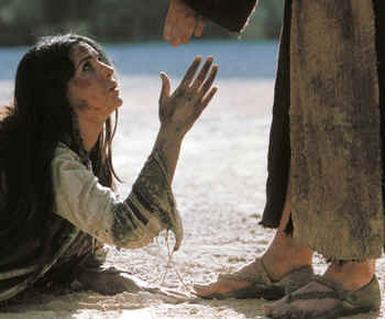
John 8:7 and 8:11- Two very important verses within the Christian world.  These take place within the very well known story of Christ’s encounter with the prostitute taken to Him for judgment.  8:7 states that he who is without sin casts the first stone; and 8:11 says go and sin no more.  Many Christians have based a great deal of their life around verses such as these.  So what would happen if this section, specifically, these two verses, did not exist?

Quite honestly, nothing.  Or more correctly, nothing should be different.  However, in this day and age, many believers find themselves feeling as though they are on thin ground where their faith is concerned.  Suggestions such as those we’ve discussed thus far only help to shake that footing.  In reality, our faith and its basis is the firmest and surest place upon which to stand, and base our lives upon.  However, in this day and age, as the roaring lion continues to grow ever stronger in this world, accusations such as thing not only come more frequently, but serve to bring hurricane force winds to the uncertain believer.

It is for this reason that we must always remain on our guard and aware of the machinations of our enemy, the Devil.  Moreover, we should be ever conscious of his methods, because as has been said before: “Darkness never learns.”  The forces of Hell constantly bring the same attacks as they have always brought, and these include the attempted shaking of Christians in their most closely held beliefs.


With the two verses mentioned above, most of these accusations begin by stating that they were added in, and most point to the King James Bible as the first perpetrator.  However, I would point out here that these verses are found in many earlier translations, including Martin Luther’s of 1545; the 1535 Miles Coverdale; and Wycliff’s of 1385.  These are not the only versions to have this section: The Latin Vulgate also carries these verses.

However, arguments could potentially be made against even these earliest of translations, because some of the original codices do not include these verses.  What is to be said, then, of the amazing words said by Jesus, which have made their way even into our pop culture?  Are the accusations of editorial liberties to be taken seriously; and if so, could the Bible be wrong?


First, let me address the claim’s historical accuracy: Of the four uncials, (four earliest known copies of the Bible), not one surviving copy has the account, let alone these two verses, written within it.  Thus, it would seem, at least on the surface, that the accusations have actual basis.  The lack of the verses within the earliest known versions of the Bible does indeed seem to close the case.

However, what this particular accusation fails to take into account, and conveniently forgets to mention, is that in every one of these versions, there are marks indicating that something is missing between John 7:52 and 8:12.  What could possibly be missing, if these are complete copies?
For that, let us begin with the Codex Vaticanus, which dates to about 325 B.C., as it includes a symbol known to indicate other alternate versions.  What this means is that the writers and translators of the Vaticanus knew of the account’s existence in prior copies, but were forced simply to mark it as known, rather than including it.  There are any number of reasons which could be given for this, but the most plausible, and quite common in that day and age, was their inability to actually see the original version.

This suggestion is absolutely plausible when one looks back to history.  The codex was written around the same time as the Council of Nicaea- And just after a civil war which left a great deal of chaos in its wake.  Though the codex is given a span of twenty-five years inception, within that period of time there were many wars of note, and all of which would have severely hampered the safe transport of this known but untranslated portion of Scripture.  Of particular note is the ruler Licinius, who from 320 to late 324, confiscated many Christian items.  Regardless of where it was written (Asia Minor, Rome or Egypt), however, the fact remains that war, persecution and political upheaval would have prevented the translation, and thus the full inclusion, of this section.


Further dismissals have come with the facetious statement that, if they were not included within the papyri, they must not have been in the original Gospel.  This is a foolish statement that stands, at best, upon assumption rather than fact.  The truth is that, even at the time the codices were written, the Bible did not exist in a collected form.  Thus, people either memorized it through study, or copied it down for others.  If one had a section, and not the other, the missing portion would be copied and sent them.  Such events are documented throughout this time period, and even within the Bible itself.  (Copies of Paul’s letters being sent to area churches, for instance.)

Further evidence of this can be seen in the writings of Papias, who pointed out that this same account was also recorded within the Gospel of the Hebrews, an apocryphal book known among scholars of Church History as one of the “Lost Gospels.”  Some may wonder why I would choose to include statements on non-canonical books: I do so for the fact that Papias’ statements were written before the earliest of the four uncials was composed.  This not only makes a strong case for its inclusion within the Gospel of John, as Papias mentions it specifically as being found in John, but also its being an actual occurrence.


Now, finally, the question must be asked: Is John the only place we see these two standards, (“he who is without sin cast the first stone,” and “neither do I condemn you, go and sin no more.”), or is it echoed in other areas of Scripture?

In Luke 12:13-14, we see a similar display in regards to the lack of judgment.  In this case, however, it is directed at a man who wanted Christ to order his brother to divide his inheritance with him.  The response was, “who appointed me judge over you?”  This is just one instance of the non-judgmental aspects portrayed in John, yet the fact that it is mentioned even one other provides a firm stance for the underlying principle.

Also in Luke (6:42) we read “Either how canst thou say to thy brother, Brother, let me pull out the mote that is in thine eye, when thou thyself beholdest not the beam that is in thine own eye? Thou hypocrite, cast out first the beam out of thine own eye, and then shalt thou see clearly to pull out the mote that is in thy brother's eye.”  This clearly echoes the “he who is without sin” statement within John.  This same statement is found in Matthew 7:5.

As for the “go and sin no more” statement we see in John 8, this statement is seen coming from Christ elsewhere: John 5:14.  However, in that instance, His blessing came with a warning; He told the man “Go and sin no more, lest greater trouble befall you.”  Similar statements are seen in Matthew, Luke and Mark.


We come now to the end of this entry.  We have seen that the lessons found in John 8 are found elsewhere in the Bible, and are thusly true.  We have discovered that there is evidence of these two verse being included in the original Gospel of John; both through witness of Papias, who predated the earliest surviving codex; as well as through the translators of the codices themselves.  We have seen the accusations of editorial liberties on this passage beginning with the KJV put to rest through the presentation of far earlier versions.

In closing, I wish to leave two final tidbits with you.  First is that three of four uncials have what are known as “lost pages.”  These were separate pages upon which were written additional translations, apparently completed after the document was crafted.  They were meant to be included with each codex; something which is, again, a well documented event of the time period, affecting far more than just copies and translations of Scripture.

Secondly, the question of “why would this section be left out?” may, perhaps, be answered best through the statements of Augustine, who wrote that he wondered if perhaps that account may prompt immoral activity; or the false belief that Christ was closing a blind eye to adultery.

We will continue to study similar accusations against Scripture at a later date.  Until then, God bless.

Monday, April 2, 2012

Not In The Bible? - Three Witnesses In Heaven


Recently, it was brought to my attention once more that certain verses which we hold as Scripture today are not found in the earliest manuscripts.  This is, for some, a troubling thought because it causes one to question the Word of God.  For myself, however, it is no more of an issue than most paraphrased translations.  Scripture remains true, regardless of what was taken from the margins and inserted.  I am hoping to show what I mean today, with the verse of 1 John 5:7.


For there are three that bear record in heaven, the Father, the Word, and the Holy Ghost: and these three are one.                                                           ~KJV

Now, there are going to be some outraged individuals when I say this, but you must hear me out: The statement that 1 John 5:7 is not in "the Bible," is true.  It is also false.  This is the paradox I am hoping to shed some light on.


We all know that nearly every version one reads, they will find some manner of the above quotation.  In this way, it is, in fact, in the Bible in a very literal sense.  Thus, the statement that it is not is false.  I want to emphasize this point, though: If one can get a copy of the Greek/Hebrew Interlinear, do so.  It will enhance your understanding of the Word tremendously, as well as help you prepare for answering charges such as this one.


Where the statement is true, however, is in the very earliest of manuscripts.  The Codex Sinaiticus, for instance, is one of the earliest copies known to us.  Within its tomes, we discover the verse in question, in its entirety, reads thusly:


For they that testify are three,
So what does this mean for the believer?  Does this indeed prove that there is no such thing as the Trinity?  If it does, it surely proves that God does not exist, correct?


In actuality, this very question was what sparked heresies that began stirring even during Paul's time.  Arianism taught, for instance, that Christ was the created Son of God, and that He did not actually exist within the Godhead from the beginning, thus rendering the Trinity teaching suspect.  Monarchianism, Patripassinism, Modalism and Manichaeanism all taught that there was no Trinity- The first three stated that all three were one God, in a literal sense, meaning that God the Father died on the cross; while the last taught that Christ was not Divine and thus there could be no divinity.  Meanwhile, Polytheism went the opposite direction, teaching that the Trinity was a corporation, if you will, of three individual gods.  None of these based their points solely on 1 John 5:7, of course; however, we can see the same sort of thoughts which led to these false teachings arising today, watered by such accusations as the one currently being addressed.


The entire accusation, (1 John 5:7 is not in the Bible), hinges on there being nothing else to support what that verse is ultimately stating: Namely, that there is a Trinity.  However, we already know that Christ stated for a fact that anyone who had seen Him had also seen the Father. (John 14:9)  This suggests, of course, that though separate, He and the Father were also one, which is an integral aspect of the Trinity.  Moreover, we see that, when asked point blank if He was the Son of God, Christ answered in the affirmative.  (Matthew 26:63&64)  There are a few arguments about these verses as well, but I'll come back to it.  
Still more affirmation of Christ's own Divinity and individual identity can be found.  For instance, when asked by Christ who people said He was, Peter immediately responded with "You are the Messiah, the Son of the living God!"  (Matthew 16:16)  Other examples are the plentiful accounts of demons crying out that He was, in fact, the Son of God.  One in particular which sticks in my mind included the question "...have you come to torment us before the appointed time?" (Matthew 8:29; Mark 3:11, 5:9; Luke 4:41, 8:30)


As pertains to the Holy Spirit- There is Christ's own baptism (Matthew 3:16; Mark 1:10; Luke 3:22; John 1:32); His assurance that His Spirit would come to lead us (John 14:1715:26; 20:22; Luke 24:29; Matthew 28:19-20); Christ's response to Peter's revelation (Matthew 10:20)...  Not to mention Genesis 1:2.  References to the Spirit of God and His individuality are found literally throughout the Bible, from Genesis to Revelation.


Finally, the charge against 1 John 5:7 fails to take into account the fact that 1 John 5:6 references Christ and the Holy Spirit- Some translations have substituted "Christ" for "Word," but regardless, it means the same.  John 1:1 - "In the beginning was the Word, and the Word was with God and the Word was God."  It goes on to say, in verse 14 "...and the Word was made flesh and dwelt among us..."


So what is the story of 1 John 5:7?  In the beginning of the story of the Bible, everything was handwritten.  It is very likely that one of the only known manuscripts of 1 John at the time it was being translated had a side notation, much like we do today, referencing the fact that the Trinity was being spoken of here by inference.  The translators assumed it was an addendum, and included it as such.  
Mind you, this is only conjecture based upon my study of Bible and Church history.  However, based upon my knowledge of the subject, it is extremely likely.  Moreover, though 5:7 was added to, you'll notice that it is not contradictory to the whole of Scripture in any way.  If anything, it, like many paraphrases, allows for a better comprehension of Biblical truth.


With all of this said, the accusation that 1 John 5:7 does not exist in the Bible is false on three grounds and only partially true on two grounds.  It is partially true, in that the verse as it currently reads is not found in whole within the oldest manuscripts.  It is also partially true as pertains to the latter half of the verse being an addendum.  
However...  It is false in that the verse exists in most translations today, this taken from a very literal standpoint.  It is false in that the verse does exist, but not as worded in most translations today.  It is false in that it does not strike against Biblical truth, and this is the heart of this "argument."  


This argument, and all of its various forms, is meant to sway a believer from the faith.  However, as I've just shown, there is nothing to the argument but hot air and the lies of the enemy.  The heart of the argument is against the Trinity, and thus, the validity of Scripture as a whole.  


The heart of the argument, however, has just been declared DOA.  


There are nine more verses which I will also look at, so stay tuned!


PS: Some folks believe Matthew 26:64 does not prove Christ claimed He was the Son of God, because His statement is "You have said it."  This only seems innocuous and noncommittal in our day and age.  In that time, and among those people, to not deny such a question was absolutely as great as a direct "yes."  It stated that not only was the question true, but that the questioner had just attested to the truth of it with his own mouth.  This is one of the reasons the Chief Priest tore his robes.  This is to say nothing of His going on to say "and you shall see the Son of Man [addressing Himself] seated at the right hand of the Almighty and coming in the clouds of glory."  This whole statement says, in a definite manner, that He WAS the Son of God, and also God. 

Monday, November 7, 2011

All The World


PlanetShakers sing "The Anthem."


R.E.T.S. talks about to whom we should be bringing the Gospel.